Today in 10 Seconds
Gospel: Persistence breaks through silence, transforms a life Rosary: Luminous Mysteries Pope: Church demands humanity shield AI from war NPR: Bombs fall while diplomats talk peace TechCrunch: Your wrist becomes your health's silent witness Saint: Mountain passes, hospices, and rescue dogs born
— † —
Mark 10:46-52
"As Jesus left Jericho with his disciples and a large crowd, Bartimaeus (that is, the son of Timaeus), a blind beggar, was sitting at the side of the road. When he heard that it was Jesus of Nazareth, he began to shout and to say, ‘Son of David, Jesus, have pity on me. ’ And many of them scolded him and told him to keep quiet, but he only shouted all the louder, ‘Son of David, have pity on me."
| ? |
Test Your Faith IQ |
Scripture |
|
|
In today's Gospel, Bartimaeus throws off his cloak before running to Jesus. Why is this detail significant?
- A) The cloak was a sign of his wealth and status
- B) A beggar's cloak was legally protected as his most essential possession
- C) It was a ritual requirement before approaching a rabbi
- D) Mark included it to show Bartimaeus was hot from the desert sun
Answer at the bottom of this newsletter.
|
 Photo: Vatican News
VATICAN NEWS
Pope Leo XIV released his first encyclical, 'Magnifica Humanitas,' calling for artificial intelligence to be stripped of logics of domination, exclusion, and war. The document positions the Church's response to AI as central to safeguarding human dignity in a technological age.
 Photo: NPR
NPR
The U.S. launched new strikes on Iran while peace talks are still ongoing, raising questions about whether war and diplomacy can coexist.
| † |
FAITH & THE WORLD |
Isaiah 48:22 |
|
|
"There is no peace for the wicked, says the LORD."
Just War Doctrine (CCC 2309)
The Catechism is blunt: even in a just war, "the use of arms must not produce evils and disorders graver than the evil to be eliminated" (CCC 2309). Striking while negotiating isn't clever strategy; it's a confession that we trust bombs more than words, and that should disturb us.
Reflect → When you're in conflict with someone, do you keep 'striking' even while claiming to want peace?
|
 Photo: TechCrunch
TechCrunch
Oura released a sleeker, more advanced health-tracking ring that monitors your body around the clock for $399.
| † |
FAITH & THE WORLD |
Psalm 139:14 |
|
|
"I praise you, because I am wonderfully made; wonderful are your works! My very self you know."
CCC 364 (Unity of Body and Soul)
The Church teaches that the body is not a machine to be optimized but a temple revealing the person (CCC 364). Tracking your sleep score isn't wrong, but if a ring knows your resting heart rate better than you know the state of your soul, something is upside down.
Reflect → Do you spend more time monitoring your body's data than examining your conscience?
|
![[GOOD NEWS] For the love of: ecstatic dance](https://www.positive.news/wp-content/uploads/2026/05/2025-10-04-Emboday-Fest-Harvest-82.jpeg) Photo: Positive.News
Positive.News
A growing daytime dance movement is drawing people who crave community, embodied joy, and something that feels spiritual without a label.
| † |
FAITH & GOOD NEWS |
2 Samuel 6:14 |
|
|
"Then David danced before the LORD with all his might, while he and all the house of Israel were bringing up the ark of the LORD with shouts and the sound of the horn."
Theology of the Body (St. John Paul II)
David didn't politely sway before the Ark; he danced with abandon, scandalizing his own wife. The body was made to express joy that words can't contain, and John Paul II spent years teaching that our bodies speak a language of self-gift that the soul desperately wants to shout.
Reflect → When was the last time your body expressed pure, unselfconscious joy?
|
| Rosary Mystery of the Day | |
| † |
Today's Mysteries |
Thursday: Luminous Mysteries |
|
|
Luminous Mysteries
- 1. The Baptism of Christ in the Jordan
- 2. The Wedding Feast at Cana
- 3. The Proclamation of the Kingdom of God
- 4. The Transfiguration
- 5. The Institution of the Eucharist
|
|
|
|
The Objection
"Why do Catholics believe the bread and wine literally become Jesus' body and blood? That sounds like magic, not faith."
The Catholic Response
Jesus didn't say "this represents my body." He said "this is my body" (Matthew 26:26), and in John 6:53-56, when listeners were horrified, he doubled down instead of clarifying it as a metaphor. The early Church took him at his word. St. Ignatius of Antioch, writing around 110 AD, called the Eucharist "the flesh of our Savior Jesus Christ" and condemned those who denied it. The Catechism teaches that the substance of bread and wine truly becomes Christ's Body and Blood through the power of the Holy Spirit (CCC 1374, 1375), not by magic but by the same divine word that spoke the universe into existence.
CCC 1374 | CCC 1375 | John 6:53-56 | Matthew 26:26 | St. Ignatius of Antioch, Letter to the Smyrnaeans 7:1
|

|
DAILY WORD GAME
Test your Catholic vocabulary
|
|
| † |
Saint of the Day |
May 28 |
|
|
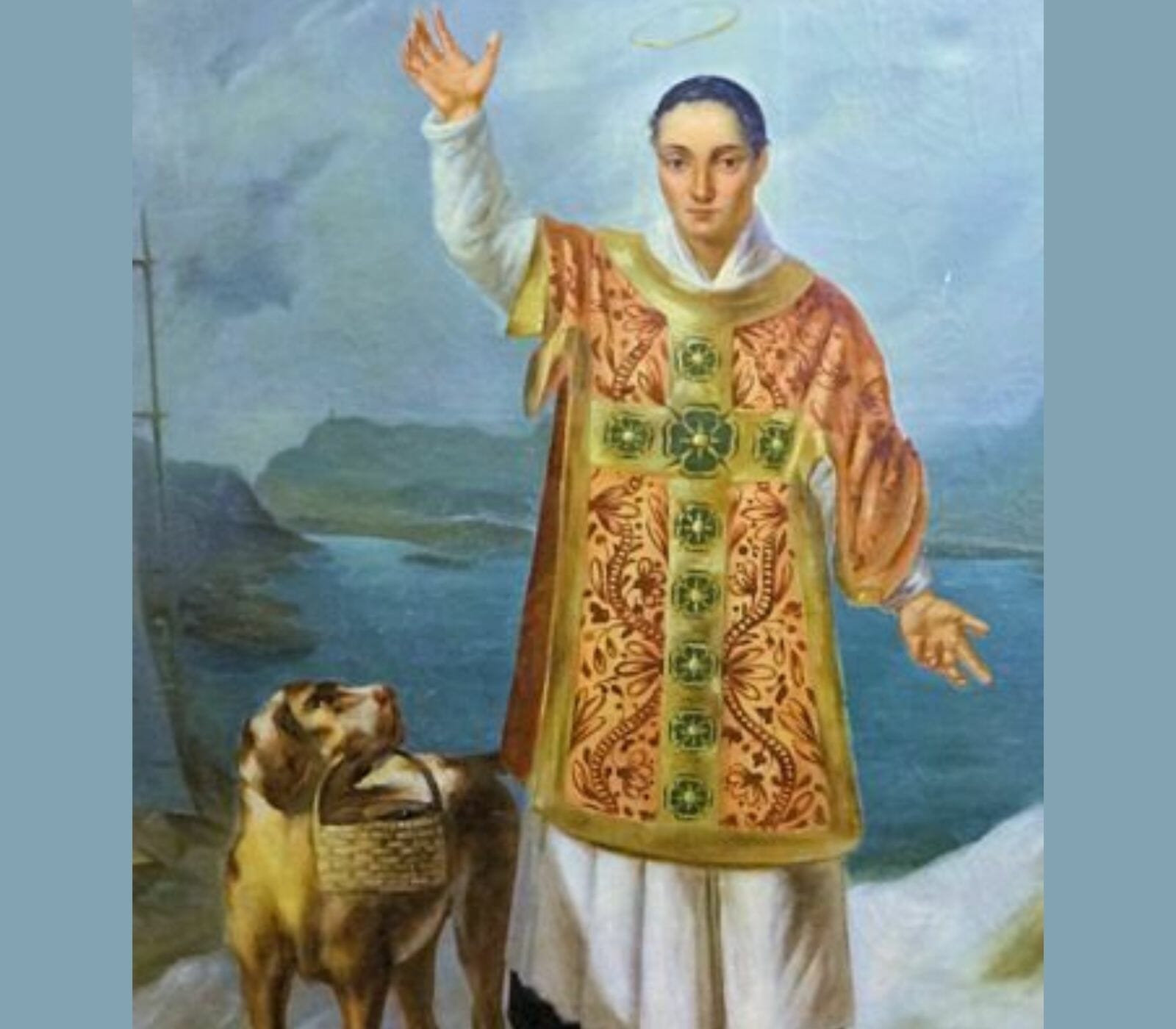
St. Bernard of Montjoux (St. Bernard of Menthon)
He founded hospices in the treacherous Alpine passes between Italy and Switzerland, saving countless travelers from freezing to death. The famous St. Bernard rescue dogs were bred centuries later by the monks who continued his mission. He reportedly turned down an arranged marriage to a noblewoman by climbing out a window the night before the wedding.
His feast is May 28, and his lifelong work rescuing stranded travelers mirrors Bartimaeus calling out from the roadside: both stories are about someone on the margins being refused the right to be ignored.
|
Trivia Answer
B . Under Mosaic law (Exodus 22:25-26), a poor man's cloak could not be kept as collateral overnight because it was his only shelter. Bartimaeus threw away the one thing the law guaranteed him, betting everything that Jesus would give him something better.
|
|
