Today in 10 Seconds
Gospel: Loyalty rewarded: thrones await the faithful Rosary: Joyful Mysteries Pope: Pope urges prayers as Ukraine marks spiritual restoration ABC News: Missiles rain on Kyiv; Ukraine strikes back NPR: Unbeaten titans clash: Spain meets France Saint: Teenage rebel fled Rome's excess for cave
— † —
Matthew 19:27-29
"Jesus said to his Apostles:
“No disciple is above his teacher,
no slave above his master.
It is enough for the disciple that he become like his teacher,
for the slave that he become like his master.
If they have called the master of the house Beelzebul,
how much more those of his household!“Therefore do not be afraid of them.
Nothing is concealed that will not be revealed,
nor secret that will not be known.
What I say to you in the darkness, speak in the light;
what you hear whispered, proclaim on the housetops.
And do not be afraid of those who kill the body but cannot kill the soul;
rather, be afraid of the one who can destroy
both soul and body in Gehenna."
| ? |
Test Your Faith IQ |
Saints |
|
|
Saint Benedict's Rule famously organizes the monastic day around prayer and work. What Latin phrase, now the Benedictine motto, captures this balance?
- A) Ad Majorem Dei Gloriam
- B) Ora et Labora
- C) Fides et Ratio
- D) Lex Orandi, Lex Credendi
Answer at the bottom of this newsletter.
|
| Rosary Mystery of the Day | |
| † |
Today's Mysteries |
Saturday: Joyful Mysteries |
|
|
Joyful Mysteries
- 1. The Annunciation
- 2. The Visitation
- 3. The Nativity of Our Lord
- 4. The Presentation in the Temple
- 5. The Finding of the Child Jesus in the Temple
|
|
|
|
The Objection
"I believe in Jesus, so I'm saved. Why do Catholics make it so complicated with sacraments, confession, and all these rituals? Just faith in Christ is enough."
The Catholic Response
Catholics absolutely believe that faith in Christ is essential, but Jesus himself instituted the sacraments as the ordinary means of receiving his grace. He told Nicodemus, "No one can enter the kingdom of God without being born of water and Spirit" (John 3:5), pointing to Baptism. He said, "Unless you eat the flesh of the Son of Man and drink his blood, you do not have life within you" (John 6:53), pointing to the Eucharist. The Catechism teaches that the sacraments are not human inventions but Christ's own actions continued through his Church, making salvation personal and tangible rather than abstract (CCC 1127-1129).
CCC 1127-1129 | John 3:5 | John 6:53 | James 2:24
|
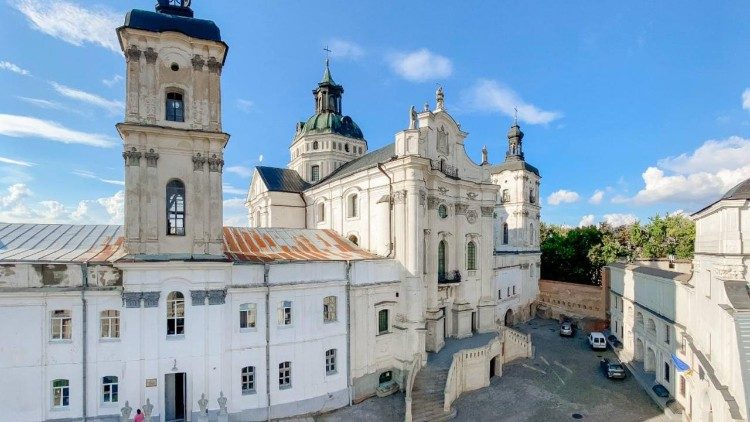 Photo: Vatican News
VATICAN NEWS
Pope Leo XIV has written to his Special Envoy urging prayers for peace in Ukraine as the nation marks 35 years since the restoration of the Latin Rite Church's structures. This is the Pope's direct personal response to the ongoing war dominating today's headlines.
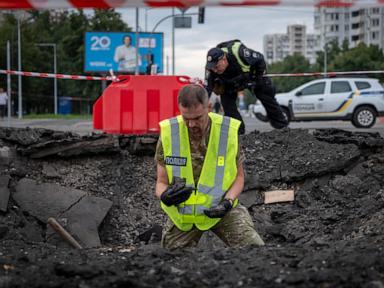 Photo: ABC News
ABC News
Russia launched overnight missile and drone strikes on Kyiv, wounding at least 11 people including a child, while Ukraine struck back at Russian naval targets.
| † |
FAITH & THE WORLD |
Psalm 10:17-18 |
|
|
"You listen, LORD, to the needs of the poor; you encourage them and hear their cry, defending the fatherless and oppressed, so that mere mortals will never again strike terror."
Just War Doctrine (CCC 2307-2317)
The Catechism insists that even in legitimate defense, the damage inflicted must not be disproportionate, and civilian populations must never be targeted (CCC 2313). A child wounded in a nighttime missile strike is not collateral damage; it is a violation of the moral law that no geopolitical calculus can justify.
Reflect → When you see war headlines and keep scrolling, what would change if you paused to pray for one specific person in that story?
|
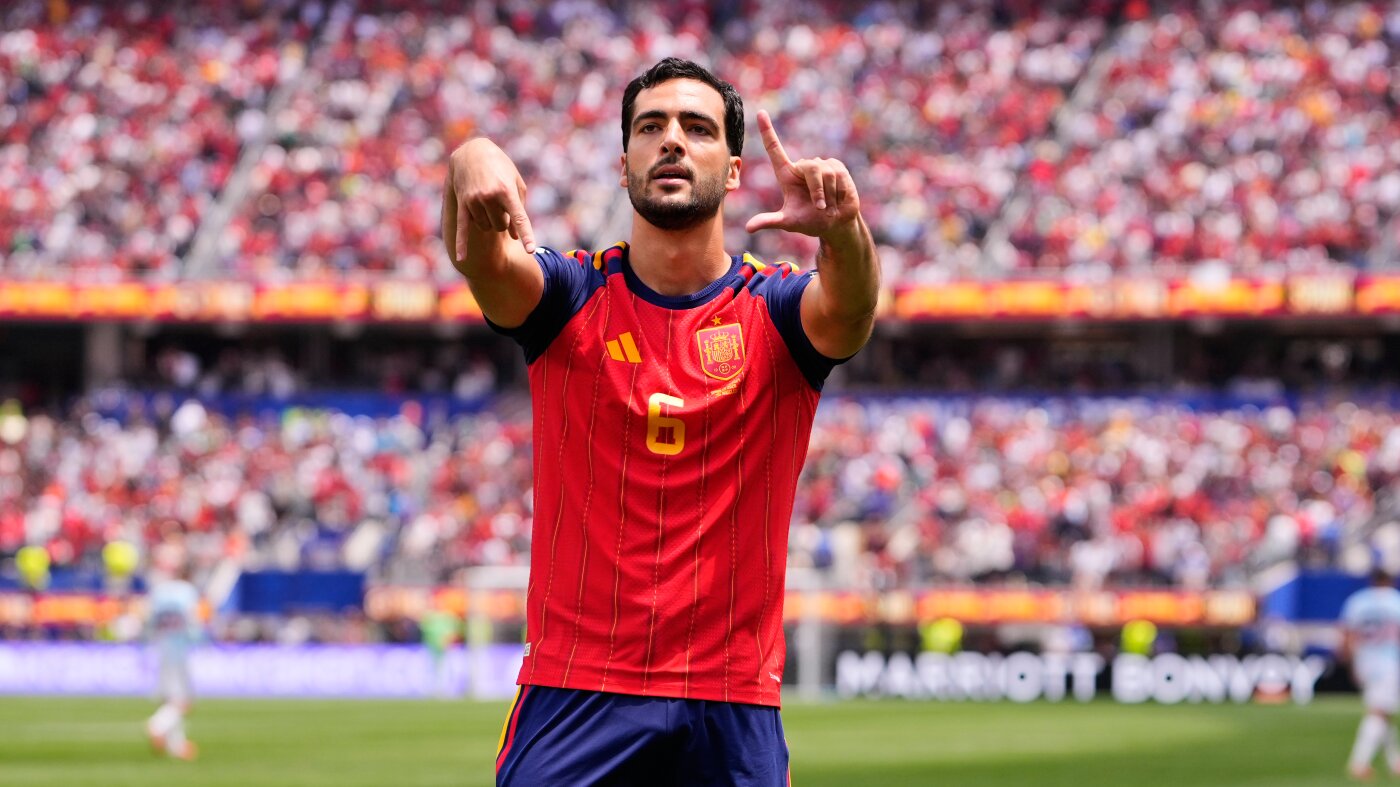 Photo: NPR
NPR
Spain advances to play France in a World Cup semifinal, a matchup between two unbeaten teams that fans have anticipated for years.
| † |
FAITH & THE WORLD |
1 Corinthians 9:24-25 |
|
|
"Do you not know that the runners in the stadium all run in the race, but only one wins the prize? Run so as to win. Every athlete exercises discipline in every way."
The Virtue of Fortitude (CCC 1808)
Paul borrowed the language of competition because he understood something athletes know instinctively: greatness costs everything you have. The virtue of fortitude, the Catechism teaches, is the moral courage to pursue good "even at the risk of one's own life" (CCC 1808), and every semifinal is a small icon of that total commitment.
Reflect → What are you training for with the same discipline these athletes bring to a single match?
|
 Photo: Good Good Good
Good Good Good
A roundup of uplifting stories this week, including conservation wins for endangered species and moments of human creativity and kindness.
| † |
FAITH & GOOD NEWS |
Genesis 1:31 |
|
|
"God looked at everything he had made, and found it very good. Evening came, and morning followed,the sixth day."
Stewardship of Creation (Laudato Si' 67-69)
Pope Francis writes in Laudato Si' that every creature has value in itself, reflecting a ray of God's infinite wisdom and goodness (LS 69). When a snail species rebounds or a leopard population recovers, it is not just an ecological win; it is creation remembering the goodness God spoke into it from the beginning.
Reflect → What small, beautiful thing did you notice this week that you forgot to be grateful for?
|

|
DAILY WORD GAME
Test your Catholic vocabulary
|
 |
| † |
Saint of the Day |
July 11 |
|
|
Saint Benedict of Nursia
Before founding Western monasticism, the teenage Benedict dropped out of school in Rome because he was disgusted by the party culture. He literally ran away to live alone in a cave near Subiaco for three years. A monk had to lower bread to him in a basket because the cave was so inaccessible. From that cave came a Rule that shaped European civilization.
His feast is July 11, and his famous call to leave everything for God mirrors today's Gospel, where Jesus promises a hundredfold return to those who abandon the familiar for his sake.
|
Trivia Answer
B . "Ora et Labora" (pray and work) summarizes Benedict's vision that manual labor and prayer are not opposites but partners in sanctifying daily life. Option A is the Jesuit motto, C is a John Paul II encyclical, and D is a principle about how liturgy shapes belief.
|
|
